
Drywall & Wall Repair in Mission Viejo, CA
We repair holes, cracks, dents, water-damaged drywall and ceilings — then match the existing texture so the repair disappears under paint. Serving Mission Viejo and nearby South Orange County. Repairs start at $250.
Drywall Repair at a Glance
- Starting price
- From $250 — final price depends on size, wall vs ceiling, texture and paint.
- Typical timing
- Small patch — a few hours, usually across two visits (compound has to dry). Large hole or ceiling — one to two days.
- We repair
- Nail & doorknob holes · Large holes · Seam cracks · Water-damaged drywall · Ceilings · Holes left by TV mounts, shelves and light fixtures · Failed repairs by other contractors
- Textures matched
- Smooth · Orange peel · Knockdown · Hand-texture · Popcorn (spot repair)
- Area served
- Mission Viejo & nearby South Orange County
- Guarantee
- 6-month workmanship warranty · Fully insured
- Fast quote
- Text photos of the damage to (818) 619-3756 for a preliminary range.
What We Repair
Most drywall damage falls into a handful of familiar categories. Here's what we see most often.
-
Small holes
Nail holes, anchor holes, doorknob dents, and the holes left behind when a TV mount, shelf or light fixture comes down. Quick to fix — still worth texture-matching so they don't show.
-
Large holes
Anything too big to simply fill. We cut back to sound material, add backing where needed, and set in a new piece of drywall so the repair is structurally solid, not just covered over.
-
Seam cracks
Cracks running along the joints between sheets. These usually mean the tape has failed — we re-tape and rebuild the joint rather than skim over it, so it doesn't come back.
-
Water-damaged drywall
Walls and ceilings damaged by leaks. Whether it can be dried and repaired or has to be cut out depends on the condition of the board — see below.
-
Ceilings
Ceiling patches, including popcorn texture. Ceilings are less forgiving than walls: the angle and the lighting make a poor patch far more obvious.
-
Failed repairs by others
Visible patches, cracked seams, mismatched texture, wavy walls, or a paint blotch where someone touched up. Sometimes the finish can be corrected, sometimes the section is cleaner redone properly.
-
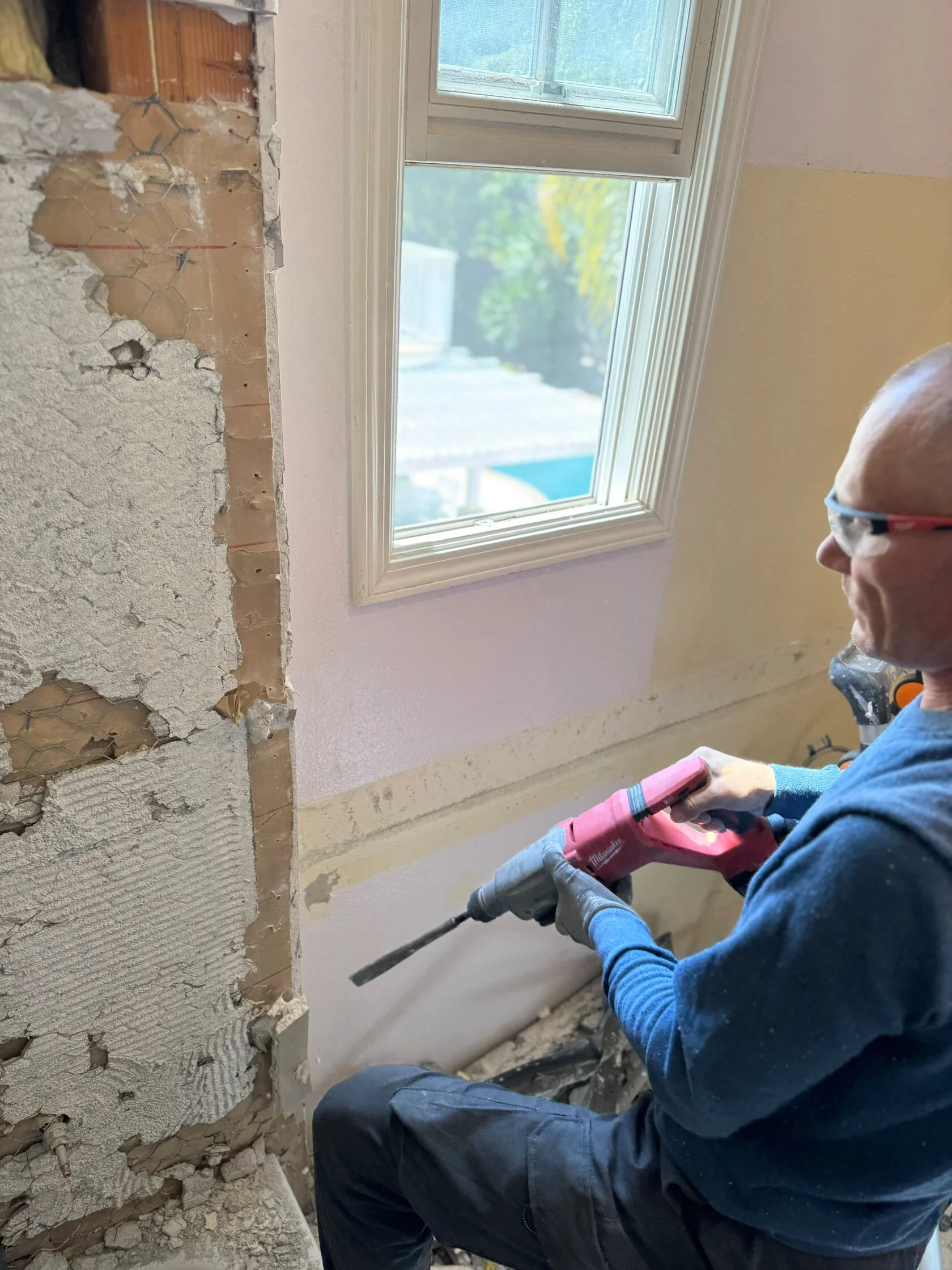
Plaster over wire lath
Some older homes have plaster on metal lath rather than drywall.
How We Repair a Typical Hole
-
Protect the room
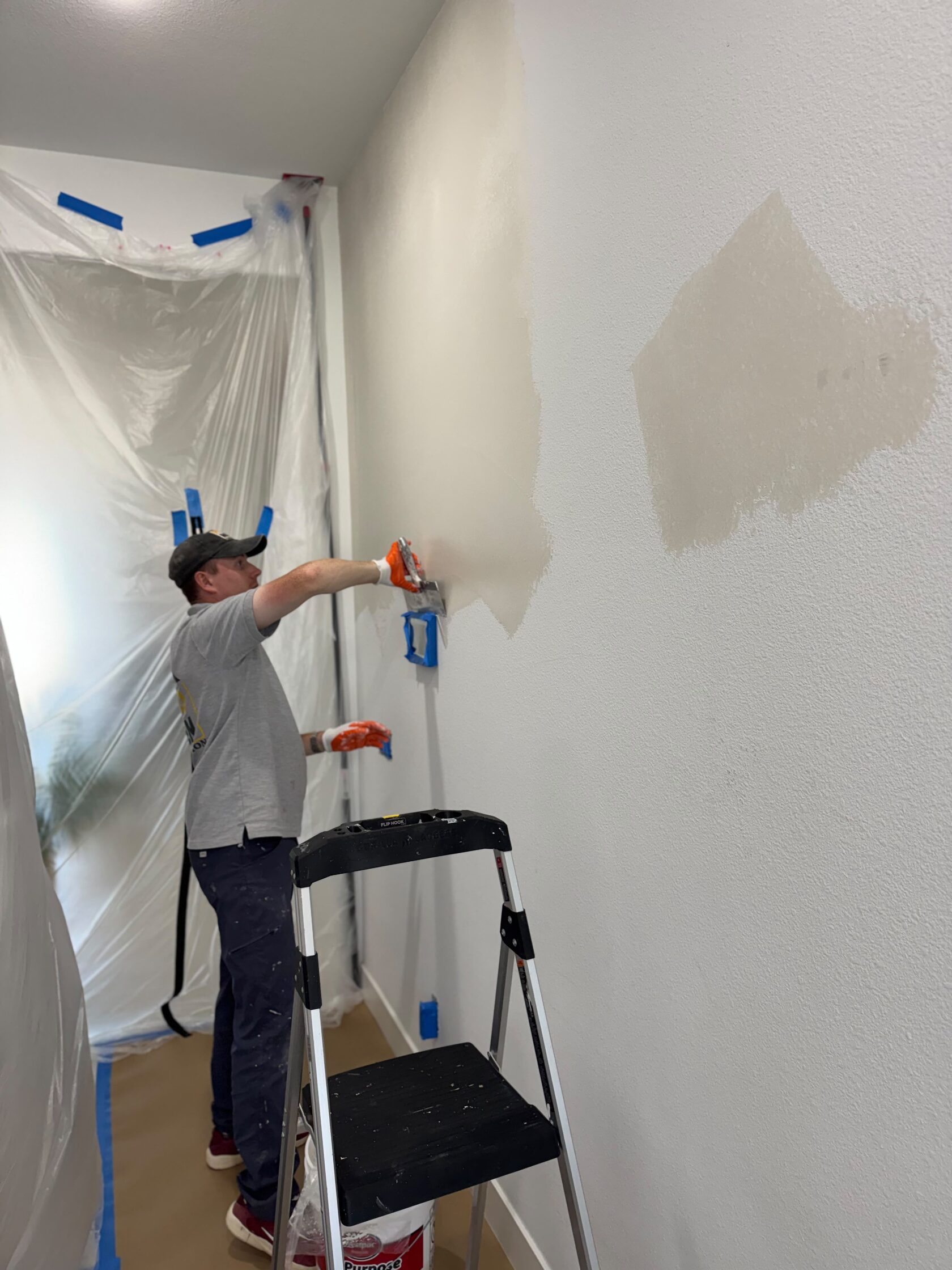
We cover the floor and furniture before anything else. Drywall work makes dust — the difference is whether it ends up on your things.
-
Cut back to sound material
We cut out the damaged section cleanly, add backing where it's needed, and fit a new piece of drywall.
-
Tape and mud
We apply joint tape over the seams, then several coats of joint compound (the filler used to smooth seams, known as mud), letting each coat dry properly before the next.
-
Sand and finish
We sand the surface flat and bring it out ready for paint.
-
Match the texture
We reproduce the density and pattern of your existing wall — not just spray texture on and hope.
The goal isn't covering the hole. It's making sure you can't find the outline once the paint is on.


Texture Matching — and When It Isn't Possible
We match smooth finish, orange peel, knockdown and hand-texture, and we spot-repair popcorn ceilings. The work is reproducing the density and pattern of the wall that's already there, so the repair reads as part of the wall rather than a patch on it.
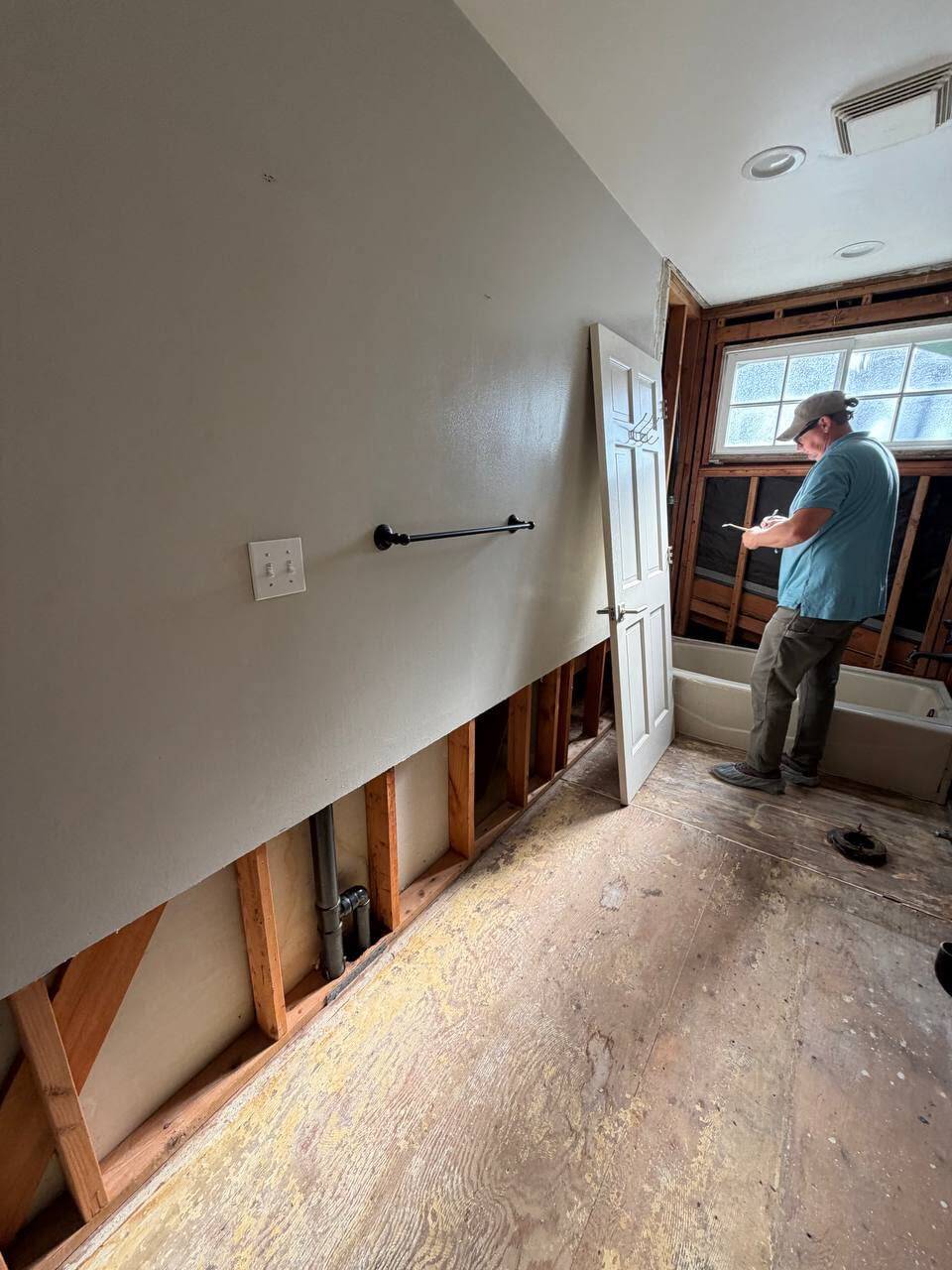
Drywall Repair After a Leak
The leak has to be fixed first. If the source is still active, the repair will fail again within months — so we confirm that before starting.
We can repair it
The drywall has dried out, is still firm, and there's no damp smell or mold.
It needs replacing
The board is soft, swollen, crumbling, or showing mold — the damaged section gets cut out and replaced.
We don't cover mold with new drywall. Where there's significant mold growth we'll recommend a mold remediation specialist first — patching over it only hides the problem until it returns.
How Long It Takes & What It Costs
-
Small patch
A few hours of work, usually across two visits — the compound has to dry between coats.
-
Large hole or ceiling
Typically one to two days, depending on size and texture.
-
Water damage or complex texture
Allow extra time — drying and texture work can't be rushed.
What affects the final price
- Size of the damage
- Wall vs ceiling
- Height
- Number of coats
- Texture complexity
- Whether painting is included
- Whether there's water damage
The exact price is confirmed after we see it in person.
Why it sometimes takes two visits
Multiple visits are normal for a repair that lasts. Each coat of compound needs to dry before the next goes on. Forcing it into a single pass is what causes shrinkage, hairline cracks, and a visible patch outline a few weeks later.
Painting, Dust and Cleanup
Do you paint the repair?
Either way. We can leave the area prepped and ready for your painter, or finish it completely — prime, texture and paint. If you still have the original paint, that's the best match; if not, we match the color as closely as possible.
One thing worth knowing: painting the wall corner to corner gives a better result than a spot touch-up, especially on older paint that has faded slightly.
What about the dust?
We cover floors and furniture before starting, use protective sheeting, sand carefully to keep dust down, and clean up afterwards. Sanding drywall creates dust — the question is how much of it ends up in the rest of your house.
Common Questions
How much does drywall repair cost in Mission Viejo?
Repairs start at $250. The final price depends on the size of the damage, wall versus ceiling, the height, how many coats are needed, the texture, and whether painting is included. Text photos of the damage and we can usually give you a preliminary range before coming out.
Will the repaired area be visible after completion?
In most cases the repair is not noticeable once texture and paint are applied — we match the existing texture rather than approximate it. Two things affect the result: the age of the existing paint and the lighting. Painting the wall corner to corner gives the best finish; a spot touch-up can leave a slight difference in shade on older, sun-faded paint.
Can you match my wall texture?
We match smooth, orange peel, knockdown and hand-texture, and spot-repair popcorn. If your texture is an unusual older hand-applied pattern that can't be reproduced in one area, we'll say so upfront and offer to bring the area out to a smooth finish instead.
How long does drywall repair take?
A small patch takes a few hours of work but usually spans two visits so the compound can dry. A large hole or a ceiling is typically one to two days, depending on size and texture.
Why do you need to come twice for a small patch?
Each coat of compound has to dry before the next goes on. Doing it in one pass is what leads to shrinkage, hairline cracks, and a visible patch outline a few weeks later.
Do you repair water-damaged walls?
Yes — once the leak itself has been fixed. If the drywall has dried and is still firm with no damp smell or mold, we repair it. If it's soft, swollen or moldy, we cut out and replace the damaged section. We don't cover mold with new drywall; where there's significant growth we recommend a remediation specialist first.
Do I need a patch or a full drywall replacement?
It's the condition of the board, not the size of the hole. If the drywall is soft, waterlogged, cracked in several places or pulling away from the framing, compound won't solve it — we cut back to sound material and fit new drywall. Sometimes replacing the full sheet is the cleaner answer.
My ceiling is popcorn and the house is older — anything I should know?
If the popcorn is original to an older home, it's worth confirming what it's made of before disturbing it. We'll flag it and point you in the right direction rather than start sanding.
Can you fix a drywall repair someone else did badly?
Regularly. Visible patches, cracked seams, mismatched texture, wavy walls, touch-up blotches — sometimes the finish can be corrected, sometimes the section is cleaner redone properly.
Do you paint after the repair?
We can prep the area for your painter or finish it completely — prime, texture and paint. If you still have the original paint, use it; otherwise we match the color as closely as possible.
Do you offer a warranty?
Yes — a 6-month workmanship warranty on the work we perform. If something related to our work fails under normal use in that time, we come back and fix it at no charge. We're also fully insured.
What areas do you serve?
We do drywall repair in Mission Viejo and nearby South Orange County. Our office is in Mission Viejo.
What if I'm not sure about the size of the damage?
Send photos through the form below or text them to us. We'll review them and advise on the best solution, usually with a preliminary price range.
- 25+ years in construction
- Texture matching, not just patching
- 6-month workmanship warranty
- Fully insured
- 4.9★ from 36 Google reviews
Need drywall repaired in Mission Viejo?
Text photos of the damage to (818) 619-3756 for a preliminary price, or fill out the form below and we'll get back to you with a range.
Get a Free Estimate
25941 Orbita, Unit 80, Mission Viejo, CA 92691
+1(818) 619-3756
